Simple skincare routine for women beginners does not need ten products, expensive creams, or a bathroom shelf full of bottles. In fact, starting with a few well-chosen products can make skincare easier, cheaper, and less stressful.
Your skin has its own protective barrier. Therefore, your first goal should be to keep that barrier clean, comfortable, and protected. The American Academy of Dermatology recommends basic habits such as gentle cleansing, moisturizing, and daily broad-spectrum sunscreen.
Moreover, beginners often make one big mistake: they try too many products at once. As a result, they may experience dryness, burning, breakouts, or redness and then have trouble finding the product that caused the problem.
This guide gives you a practical simple skincare routine for women beginners that you can adjust for dry, oily, combination, sensitive, or normal skin.
Why Beginners Should Start Small
A good routine should be easy enough to follow every day.
Therefore, start with three basic jobs:
- Clean the skin.
- Add moisture.
- Protect the skin from sunlight.
You can add special treatments later.
The goal is not to have the longest routine. Instead, the goal is to create a routine that you can actually follow.
What Makes a Skincare Routine Simple?
A simple routine uses only the products that solve a real need.
For most beginners, that means:
| Product | Main job | When to use |
| Gentle cleanser | Removes dirt, oil, and makeup | Morning/night |
| Moisturizer | Helps reduce dryness | Morning/night |
| Sunscreen | Helps protect against UV exposure | Morning |
| Treatment | Targets a specific concern | Optional |
So, you do not need to buy every product that appears on social media.
The Three-Product Starting Point
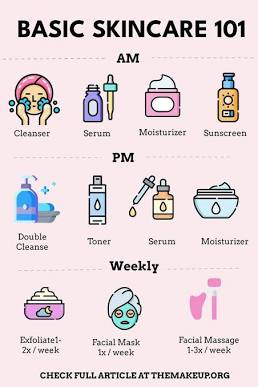
The easiest simple skincare routine for women beginners starts with cleanser, moisturizer, and sunscreen.
This small routine also makes troubleshooting easier.
If your skin becomes irritated, you have fewer products to check.
Furthermore, simple routines can help you save money because you buy fewer items.
Step One: Choose a Gentle Cleanser
A cleanser removes sweat, excess oil, dirt, and makeup.
However, a cleanser should not leave your face feeling painfully tight or squeaky.
Look for words such as:
- Gentle
- Mild
- Fragrance-free
- Non-comedogenic
- Suitable for sensitive skin
If your skin feels tight immediately after washing, your cleanser may be too harsh.
How to Wash Your Face Correctly
Wet your face with lukewarm water.
Then apply a small amount of cleanser with clean fingertips.
Massage gently for about 20 to 30 seconds.
Next, rinse well.
Finally, pat your face dry with a clean towel.
Do not scrub hard. Rough rubbing can make irritated skin feel worse.
Morning Cleansing Does Not Need to Be Aggressive
Some women prefer a gentle cleanser in the morning.
Others with dry or sensitive skin may find that a water rinse works better.
Therefore, pay attention to how your skin feels.
If morning cleansing leaves you dry, try a gentler method.
Nighttime Cleansing Matters More
Nighttime is especially important if you wear makeup, sunscreen, or long-wear products.
First, remove makeup.
Then cleanse your face.
Afterward, apply moisturizer.
This approach gives your skin a clean surface before your nighttime products.
Step Two: Pick the Right Moisturizer
Moisturizer helps your skin hold water and supports the skin barrier.
Research on moisturizers and barrier care shows that well-formulated products can improve hydration and reduce water loss from the skin.
For beginners, look for a moisturizer that feels comfortable rather than choosing one because it is expensive.
Dry Skin Needs More Comfort
Dry skin often feels rough, tight, or flaky.
Therefore, choose a richer cream or lotion.
Ingredients such as ceramides can be useful because ceramides are part of the skin’s protective outer barrier. Recent research continues to examine their role in maintaining skin barrier health.
Oily Skin Still Needs Moisturizer
Many beginners with oily skin skip moisturizer.
However, oily skin can still become dehydrated.
Instead, choose a lightweight moisturizer.
Look for:
- Oil-free formulas
- Gel textures
- Non-comedogenic labels
- Lightweight lotions
The AAD notes that people with acne-prone skin can look for products labeled oil-free or non-comedogenic.
Combination Skin Needs Balance
Combination skin can feel oily around the forehead, nose, and chin while feeling dry around the cheeks.
Therefore, do not assume your entire face needs the same amount of product.
Use a light layer across your face.
Then add a little more moisturizer to areas that feel dry.
Sensitive Skin Needs Fewer Ingredients
Sensitive skin may react to fragrance, strong acids, or other ingredients.
So, begin with gentle products.
Fragrance-free products can be a useful choice when irritation is a concern.
The AAD explains that personal-care products can trigger contact dermatitis in people who react to certain ingredients.
Step Three: Never Forget Sunscreen
Sunscreen is one of the most important parts of a simple skincare routine for women beginners.
The AAD recommends a broad-spectrum sunscreen with SPF 30 or higher and water resistance.
Sunscreen helps protect skin from ultraviolet radiation.
It also plays an important role in reducing sun-related skin damage.
How Much Sunscreen Should You Use?
A practical approach is to apply enough sunscreen to cover all exposed areas.
Do not forget:
- Face
- Ears
- Neck
- Hairline
- Hands
Also, reapply when needed, especially after swimming, sweating, or spending extended time outdoors.
Sunscreen Is Not Just for Sunny Days
Cloudy weather does not mean UV exposure disappears.
Therefore, sunscreen should remain part of your morning routine when you expect outdoor exposure.
A simple daily habit is easier to maintain than trying to remember sunscreen only during vacations.
Where Does Serum Fit?
A serum is optional.
That point matters because beginners often think serum is required.
It is not.
You can build a useful routine without one.
However, a serum may target a specific concern such as dryness, uneven tone, or certain signs of aging.
Should Beginners Use Vitamin C?
Vitamin C can be useful for some people, particularly when they want to add an antioxidant-focused product.
However, you do not need it on day one.
First, establish your cleanser, moisturizer, and sunscreen routine.
After your skin feels comfortable with those products, you can consider adding one new product.
Should Beginners Use Retinol?
Retinoids can be powerful ingredients, but they are not necessary for everyone starting skincare.
They can also cause dryness and irritation when introduced too quickly.
Therefore, beginners should learn basic skincare first.
If you want to use a retinoid for acne or other skin concerns, consider speaking with a dermatologist about the best option.
Exfoliation Is Not a Daily Job
Another common beginner mistake is exfoliating every day.
Your skin does not need aggressive scrubbing to become clean.
Physical scrubs can feel satisfying, but overuse may irritate the skin.
Instead, if you need exfoliation, introduce it slowly and choose a product that matches your skin needs.
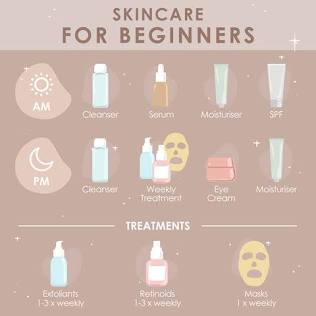
A Simple Skincare Routine for Women Beginners at Night
A beginner-friendly evening routine can look like this:
Step 1: Remove makeup if needed.
Step 2: Cleanse gently.
Step 3: Apply an optional treatment.
Step 4: Apply moisturizer.
That is enough for many people.
You do not need to apply five active ingredients before bed.
A Simple Skincare Routine for Women Beginners in the Morning
Your morning routine can be even shorter.
Step 1: Gently cleanse or rinse.
Step 2: Apply moisturizer.
Step 3: Apply broad-spectrum SPF 30+ sunscreen.
If you wear makeup, apply makeup after your skincare products have settled.
How to Choose Products by Skin Type
Your skin type can help guide your choices.
| Skin type | Cleanser | Moisturizer | Sunscreen |
| Dry | Creamy, gentle | Rich cream | Moisturizing SPF |
| Oily | Gentle gel | Lightweight | Light, non-comedogenic |
| Combination | Mild cleanser | Light lotion | Comfortable SPF |
| Sensitive | Fragrance-free gentle cleanser | Simple moisturizer | Gentle broad-spectrum SPF |
| Normal | Mild cleanser | Lotion or cream | Broad-spectrum SPF |
Remember, these are starting points rather than strict rules.
How to Tell Your Skin Type
Wash your face gently.
Then wait about 30 minutes without applying skincare.
Notice how your skin feels.
If your entire face feels tight, you may have dry skin.
If your face becomes shiny across most areas, you may have oily skin.
If only your T-zone becomes oily, you may have combination skin.
However, skin type can change with weather, age, hormones, products, and other factors.
The Beginner Product Shopping Rule
Do not buy five new products on the same day.
Instead, buy one product at a time.
Use it long enough to understand how your skin responds.
Then introduce another product.
This approach makes your skincare routine easier to manage.
Why Patch Testing Matters
Before using a new product across your face, consider testing it on a small area first.
This can help you notice irritation before applying the product everywhere.
If you develop a persistent rash, swelling, severe burning, or other concerning reaction, stop using the product and seek medical advice.
The AAD explains that dermatologists can use patch testing to identify substances that cause allergic contact reactions.
Real-Life Beginner Example
Imagine Maya, a 27-year-old office worker.
She used six skincare products every morning.
However, her face often felt dry by lunchtime.
Instead of adding another product, she simplified her routine.
She switched to a gentle cleanser, a comfortable moisturizer, and daily sunscreen.
After several weeks, she found the routine easier to follow.
The lesson is simple: more products do not automatically mean better skincare.
Case Study: Oily Skin and Overwashing
Consider another beginner, Sara.
She noticed oily skin around her nose and forehead.
So, she washed her face several times each day.
However, her skin began feeling tight.
Her better approach was to reduce unnecessary washing and use a gentle cleanser with a lightweight moisturizer.
This example shows why skincare should respond to your skin rather than fight it.
Case Study: Dry Skin in Winter
Now consider Emma.
During cold months, her cheeks became rough and uncomfortable.
She added more exfoliation because she thought the flakes meant she needed deeper cleaning.
Instead, she switched to gentler cleansing and a richer moisturizer.
Her routine became more comfortable.
The lesson is important: dryness does not always mean you need more exfoliation.
Expert Advice: Protect the Skin Barrier
Dermatology research places strong attention on the skin barrier.
A healthy barrier helps limit water loss and protects against outside stressors.
A 2023 expert consensus review found that gentle, skin-friendly cleansing and moisturizing can support barrier health, with ceramides among the ingredients discussed for this purpose.
Therefore, beginners should focus on comfort before chasing complicated trends.
Expert Advice: Do Not Chase Instant Results
Skincare usually needs patience.
One product rarely changes everything overnight.
Instead, watch for gradual changes in comfort, dryness, oiliness, breakouts, or overall appearance.
Also, take pictures under similar lighting if you want to compare progress.
Advantages of Keeping Skincare Simple
A simple skincare routine for women beginners offers several advantages.
Main advantages
- It costs less.
- It takes less time.
- It is easier to remember.
- It reduces product overload.
- It makes troubleshooting easier.
- It supports consistent habits.
- It can be easier for sensitive skin.
Most importantly, simplicity makes consistency possible.
Disadvantages of a Very Simple Routine
A basic routine also has limits.
For example, it may not fully address:
- Moderate or severe acne
- Persistent rosacea
- Strong pigmentation
- Eczema
- Severe dryness
- Deep wrinkles
- Repeated allergic reactions
Therefore, simple skincare should not replace medical treatment when you have a skin condition that needs professional care.
Ingredients Beginners Can Understand
You do not need to memorize a giant ingredient list.
Instead, learn a few useful categories.
Humectants help attract water.
Emollients help soften skin.
Occlusives help reduce water loss.
Ceramides are skin lipids involved in the protective barrier.
Antioxidants help protect against oxidative stress.
Understanding these basic groups can make shopping easier.
Ingredients You May Want to Avoid at First
When starting, avoid making your routine too complicated.
You may want to delay strong combinations of:
- Exfoliating acids
- Retinoids
- Strong acne treatments
- Multiple fragranced products
- Several new serums
You can add targeted products later.
How Weather Changes Your Routine
Your skin may behave differently during different seasons.
Hot, humid weather may make lightweight products feel better.
Cold, dry weather may make a richer moisturizer more comfortable.
Therefore, your skincare routine does not have to stay exactly the same all year.
Skincare for Women in Their 20s
In your 20s, focus on basic protection and healthy habits.
A strong starting routine includes:
- Gentle cleansing
- Moisturizing
- Sunscreen
- Optional targeted treatment
There is no need to buy a large anti-aging collection simply because you turned a certain age.
Skincare for Women in Their 30s
Women in their 30s may start noticing changes in dryness, texture, pigmentation, or fine lines.
However, the basics still matter.
Daily sunscreen and consistent moisturizing remain useful foundations.
If you want to add an active ingredient, introduce one at a time.
Skincare for Women in Their 40s and Beyond
Skin often becomes drier and more sensitive with age.
Therefore, comfort becomes increasingly important.
A gentle cleanser, moisturizer, and sunscreen can remain the foundation.
You can then discuss targeted concerns with a dermatologist if necessary.
Makeup and Skincare Order
If you wear makeup, skincare usually comes first.
A simple morning order is:
Cleanse → Moisturize → Sunscreen → Makeup
Give products a short moment to settle when needed.
Then apply makeup.
Common Beginner Mistakes
Here are mistakes worth avoiding:
- Using too many products.
- Scrubbing too hard.
- Skipping moisturizer because of oily skin.
- Forgetting sunscreen.
- Changing products every few days.
- Using strong active ingredients together.
- Ignoring irritation.
- Buying products only because they are popular online.
Instead, keep your routine calm and consistent.
A 30-Day Beginner Skincare Plan
Week 1: Build the base
Use cleanser, moisturizer, and sunscreen.
Week 2: Watch your skin
Notice dryness, oiliness, redness, or breakouts.
Week 3: Improve only what needs improvement
If everything feels comfortable, continue.
If you have a specific concern, consider one targeted product.
Week 4: Review
Ask yourself:
- Is my skin more comfortable?
- Is my routine easy?
- Am I using sunscreen consistently?
- Do I really need another product?
This four-week method can stop unnecessary shopping.
Simple Skincare Routine for Women Beginners on a Budget
You do not need luxury products.
Instead, spend your money where it matters most.
A sensible budget order is:
- Sunscreen
2. Moisturizer
3. Cleanser
4. Optional treatment
Price does not automatically determine whether a product suits your skin.
Simple Skincare Routine for Women Beginners While Traveling
Travel can make skincare difficult.
So, take only the basics.
Pack:
- Small cleanser
- Moisturizer
- Sunscreen
- One essential treatment, if needed
Avoid starting a new product during a trip.
Your skin already has to deal with changes in climate, water, sleep, and routine.
When You Should See a Dermatologist
A simple skincare routine for women beginners can handle basic daily care, but some problems need professional attention.
Consider seeing a dermatologist for:
- Painful acne
- Scarring
- Persistent rash
- Severe itching
- Repeated swelling
- Unexplained skin changes
- Severe redness
- A reaction that does not improve
A dermatologist can help identify the cause and recommend treatment.
Your Beginner Skincare Checklist
Before you finish building your routine, check these boxes:
☐ Gentle cleanser
☐ Comfortable moisturizer
☐ Broad-spectrum SPF 30+ sunscreen
☐ Products suitable for your skin
☐ One product introduced at a time
☐ No aggressive daily scrubbing
☐ No unnecessary product overload
☐ Consistent morning routine
☐ Consistent nighttime routine
☐ Professional advice when needed
That is the foundation of a simple skincare routine for women beginners.
Frequently Asked Questions
- What is the best simple skincare routine for women beginners?
The best simple skincare routine for women beginners usually starts with a gentle cleanser, moisturizer, and broad-spectrum SPF 30+ sunscreen.
- How many skincare products does a beginner need?
Three basic products can be enough: cleanser, moisturizer, and sunscreen. Add treatments only when you have a clear reason.
- Should beginners wash their face twice a day?
Many people cleanse in the morning and evening. However, people with dry or sensitive skin may prefer a gentler morning approach.
- Is moisturizer necessary for oily skin?
Yes. Oily skin can still become dehydrated. Choose a lightweight, non-comedogenic moisturizer.
- Should I use sunscreen every morning?
Yes, especially when you will be outdoors. The AAD recommends broad-spectrum SPF 30 or higher.
- Can I skip toner?
Yes. Toner is optional and is not required for a basic skincare routine.
- Do beginners need serum?
No. Serum can be useful for specific concerns, but it is not essential when you are starting.
- Should beginners use retinol?
Not necessarily. First establish your basic routine. If you want retinoid treatment, discuss the right option with a healthcare professional.
- Is exfoliation necessary?
No. Exfoliation is optional. Over-exfoliating can cause irritation, so beginners should be careful.
- How long should I wait between skincare products?
You generally do not need long waiting periods. Let each layer settle comfortably before applying the next.
- Can I use the same moisturizer morning and night?
Yes, if it works well for your skin. You can use the same moisturizer at both times.
- What should beginners use for sensitive skin?
Choose gentle, fragrance-free products when possible and introduce products slowly.
- What is the best skincare routine for dry skin?
Use a gentle cleanser, richer moisturizer, and daily sunscreen. Ceramide-containing moisturizers may also support skin barrier care.
- What is the best routine for oily skin?
Use a gentle cleanser, lightweight moisturizer, and sunscreen that feels comfortable and does not clog your pores.
- Can skincare remove acne overnight?
No. Acne usually needs patience and sometimes medical treatment. Avoid repeatedly changing products because of one breakout.
- Why does my face feel tight after washing?
Your cleanser may be too harsh, or you may be washing too aggressively. Try gentler cleansing.
- Can I use skincare before makeup?
Yes. A simple order is cleanser, moisturizer, sunscreen, and then makeup.
- How should I introduce a new skincare product?
Introduce one new product at a time. Consider testing it on a small area first, particularly if your skin is sensitive.
- Can beginners use several active ingredients together?
It is better to avoid complicated combinations at first. Add one active ingredient at a time so you can understand how your skin reacts.
- What is the biggest skincare mistake beginners make?
The biggest mistake is often doing too much too soon. A consistent basic routine usually makes more sense than a crowded shelf of products.
Final Thoughts
A good simple skincare routine for women beginners is not about having perfect skin. Instead, it is about creating easy habits that protect and support your skin every day.
Start with three basics: cleanser, moisturizer, and sunscreen.
Then, give your skin time to adjust.
If you have a specific concern, add one targeted product instead of changing everything at once. Also, remember that irritation is a signal to slow down, not a sign that a product is “working.”
Most importantly, do not let social media convince you that skincare needs to be complicated. Your routine should fit your skin, budget, lifestyle, and comfort.
For reliable dermatology guidance, use the American Academy of Dermatology’s skincare resources. For sunscreen information and consumer safety guidance, the U.S. Food and Drug Administration’s sunscreen information is another useful reference. Research on skin-barrier care is also available through PubMed.
The best beginner routine is the one you can follow consistently. Start small, protect your skin, and add more only when you truly need it.