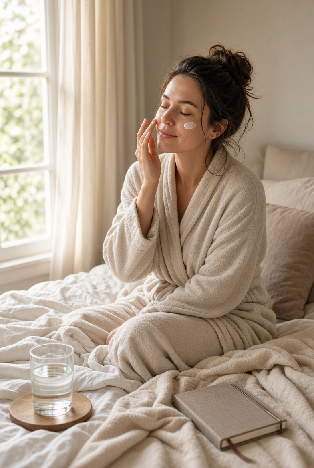
Simple self care routine for women starts with small choices that protect your time, energy, body, and mind. You do not need a perfect morning, expensive products, or a long list of habits. Instead, you need a plan that feels easy enough to repeat on busy days.
A simple self care routine for women can include sleep, food, movement, hygiene, skin care, quiet time, friendship, and healthy limits. The World Health Organization explains self-care as actions people use to promote health, prevent illness, maintain health, and cope with illness, with or without support from a health worker.
A simple self care routine for women can begin with one habit, not a full lifestyle change.
For a simple self care routine for women, choose actions that fit your budget and schedule.
Why simple self care routine for women works
A simple self care routine for women works because it lowers the effort needed to begin. When a habit takes five or ten minutes, you are more likely to repeat it. Also, small habits can make your day feel less rushed.
The goal is not to become perfect. Instead, the goal is to create small moments that help you care for yourself.
The best simple self care routine for women changes when your needs change.
Think of a simple self care routine for women as a flexible guide, not a strict rulebook.
Wake up without grabbing your phone
Before checking messages, sit up, take a few slow breaths, and notice how you feel.
Then drink some water and open a window if the weather allows. This gives you a quiet moment before emails, social media, news, and other demands enter your day.
You can also place your phone farther from your bed at night. That makes it easier to start the morning without immediately scrolling.
Give your morning a gentle start
A simple self care routine for women should not feel like another job.
Give yourself ten calm minutes before work, school, childcare, or household tasks. You could sit quietly, stretch, listen to music, or enjoy breakfast.
A calm start can make the whole morning feel more manageable.
Drink water before the second cup
Keep a glass or bottle near your bed.
Water will not solve every tired feeling. However, drinking enough fluids supports normal body functions.
Instead of trying to remember all day, connect water with habits you already have. Drink after waking, with meals, and after exercise.
Eat a real breakfast when you need it
Choose food that gives you lasting energy.
For example, try:
- Eggs and toast
- Yogurt with fruit
- Oats with nuts
- Rice with vegetables and protein
- Whole-grain toast with peanut butter
- Fruit with yogurt and seeds
You do not need an expensive breakfast.
The best choice depends on your hunger, health needs, culture, budget, and schedule.
Build a simple self care routine for women around movement
You do not need a gym.
A brisk walk, gentle stretching, dancing, cycling, swimming, or a short home workout can fit into a normal day.
The CDC recommends that adults aim for at least 150 minutes of moderate physical activity each week, plus muscle-strengthening activity on at least two days. Importantly, you can break the activity into smaller periods.
For example, ten minutes of walking in the morning, ten minutes at lunch, and ten minutes after dinner can add up.
Stretch the places that feel tight
Spend three to five minutes moving your neck, shoulders, back, hips, and legs.
Move gently.
Do not force a stretch or push through sharp pain. If you have an injury or health condition, ask a qualified professional what movements are suitable for you.
Protect your skin every morning
Wash gently, moisturize when needed, and protect your skin from the sun.
The American Academy of Dermatology recommends broad-spectrum, water-resistant sunscreen with SPF 30 or higher when outdoors.
For many people, a basic routine can be enough:
Morning: Cleanse → moisturize → sunscreen
Night: Cleanse → moisturize
You do not need a shelf full of products.
Keep skin care simple
You do not need ten products.
A gentle cleanser, moisturizer, and sunscreen can form a basic daytime routine for many people.
The American Academy of Dermatology also recommends applying moisturizer to damp skin and choosing products that match your skin type.
If a product causes burning, swelling, or another concerning reaction, stop using it and seek appropriate advice.
Wash your face before bed
Removing sweat, dirt, and makeup can help keep skin clean.
The AAD suggests gentle cleansing before bed and says most people should limit face washing to twice daily and after sweating.
However, everyone’s skin is different. Very dry or sensitive skin may need a simpler approach.
Give your body a clean reset
A shower, clean clothes, oral care, and fresh bedding can make you feel ready for the next part of your day.
Keep your everyday products easy to reach.
That simple change can save time when you feel tired.
Create a simple self care routine for women at work
Every two or three hours, pause for a minute.
Stand up. Relax your shoulders. Look away from the screen. Take a few slow breaths.
If possible, walk around the room or office.
These short breaks can also help you avoid sitting for long periods.
Make lunch a real break
Whenever possible, step away from your desk.
Eat slowly, drink water, and avoid turning every meal into a work meeting.
Even a short break can create a useful boundary between work and personal time.
Use a five-minute tidy rule
Pick one small area.
Put away five things, wipe one surface, or clear one chair.
You do not need to clean your entire home.
Small wins can make your space feel calmer without taking a whole afternoon.
Choose one task that can wait
Not every task needs to happen today.
Delaying a low-value task can protect your energy for something more important.
Ask yourself:
“Does this really need to happen today?”
If the answer is no, move it to another day.
Practice saying no kindly
A simple “I cannot do that today” is enough.
You do not need a long excuse for every boundary.
Healthy boundaries can protect your time and reduce unnecessary stress.
The Office on Women’s Health notes that stress and sleep problems can affect mental health, while healthy habits can support mental well-being.
Make room for quiet
Turn off alerts for ten minutes.
Sit outside, read a page, pray, journal, or simply breathe.
Quiet time does not have to look special.
Sometimes five peaceful minutes can feel better than another hour of scrolling.
Build a simple self care routine for women with music
Play one song that changes your mood.
Use it while getting dressed, cleaning, cooking, stretching, or walking.
Music can also make boring tasks feel less boring.
Stay connected to good people
Send a short message to someone you trust.
A real conversation can be more useful than endless scrolling.
You could say:
“How are you doing today?”
That simple message may start a meaningful conversation.
Schedule friendship instead of waiting
Put a coffee, walk, phone call, or family visit on your calendar.
Social care is easier when it has a place in your week.
A simple self care routine for women should not focus only on products and exercise. Relationships matter too.
Protect your personal time
A simple self care routine for women needs time that belongs to you.
Even 15 minutes can help you reset.
You might read, sit outside, enjoy tea, write in a notebook, or simply do nothing.
Rest does not need to be earned.
Make your evening slower
Dim bright lights, lower noise, and finish demanding tasks earlier when possible.
Your brain needs a clear signal that the day is ending.
Try creating a small evening pattern that happens in the same order each night.
Put the phone away before sleep
Charge your phone away from your pillow if that works for you.
Replace late scrolling with reading, gentle music, stretching, or quiet conversation.
The Office on Women’s Health notes that sleep supports both physical and mental health, and women can experience sleep problems at different stages of life.
Give sleep a fixed window
Most adults need at least seven hours of sleep.
Try to keep your sleep and wake times fairly steady, even on weekends.
A simple self care routine for women should protect sleep rather than treating sleep as something you do only after every task is finished.
Create a simple self care routine for women before bed
Brush your teeth, wash your face, prepare tomorrow’s clothes, and write down anything you must remember.
Then let the list wait until morning.
The aim is to close the day without carrying every unfinished task into bed.
Prepare tomorrow in five minutes
Fill your water bottle.
Pack your bag.
Set out clothes.
Check your first appointment.
These small actions can reduce morning stress.
Keep a tiny mood journal
Write three lines:
- What felt good?
- What felt hard?
- What do I need tomorrow?
This can take less than five minutes.
You do not need to write pages every night.
Notice your energy pattern
Some women feel strongest in the morning, while others work better later.
Plan hard tasks around your own pattern instead of copying someone else’s routine.
A simple self care routine for women should fit your real body and life.
Make self care affordable
A simple self care routine for women does not require luxury products.
Walking, stretching, reading, resting, calling a friend, and taking a warm shower can cost little or nothing.
You can also use what you already have at home.
Use a weekly reset
Choose one day to check your:
- Calendar
- Food
- Laundry
- Appointments
- Money tasks
- Personal plans
- Exercise
- Rest time
Keep the reset short and realistic.
Keep one joy habit
Read, draw, garden, cook, dance, take photos, or enjoy a hobby.
Joy is not wasted time.
A simple self care routine for women can include things that have no clear “productivity” value.
That is okay.
Try a simple self care routine for women on busy days
When life becomes crowded, use the minimum plan:
- Drink water
- Eat something nourishing
- Move for five minutes
- Wash up
- Connect with one person
- Prepare for sleep
You do not have to complete every habit every day.
Adjust the routine during your period
Energy and comfort can change across the menstrual cycle.
Some days may call for gentle movement and extra rest, while other days may feel normal.
Listen to your body.
If you have unusual pain, very heavy bleeding, or another concerning symptom, speak with a qualified health professional.
Respect changes during pregnancy
Pregnancy can change what feels safe and comfortable.
Follow advice from your prenatal care team instead of forcing a normal workout or diet plan.
The CDC provides specific guidance for healthy pregnant and postpartum women, but personal medical advice should come from your own care team.
Adapt self care as you get older
Your needs can change with age, work, family life, menopause, sleep changes, and activity levels.
Review your habits instead of assuming the same plan will always work.
The Office on Women’s Health notes that hormonal changes around menopause can affect sleep and mood, so routines may need to change over time.
Use expert advice, not social media pressure
Self care should support health, not create fear.
WHO explains that self-care works alongside the health system. People also need to know when to seek professional care.
A social media creator may show a two-hour morning routine.
That does not mean you need one.
Know when self care is not enough
Self-care has limits.
If you have ongoing pain, severe tiredness, major sleep problems, unusual bleeding, breathing trouble, persistent sadness, or another worrying symptom, talk with a qualified health professional.
Do not use a wellness routine as a substitute for medical care.
A real-life example: Maya’s ten-minute plan
Maya works from home and cares for two children.
She started with water after waking, a five-minute walk, a basic skin routine, and ten phone-free minutes at night.
After four weeks, she said the biggest benefit was feeling more in control of her day.
This is a practical example, not a clinical study.
The lesson is simple: a routine can work because it fits real life.
A mini case study: the 15-minute evening reset
Consider a common pattern.
A woman finishes work at 7 p.m., feels too tired for a long routine, and scrolls until midnight.
Instead, she tests a 15-minute reset:
- 5 minutes to prepare tomorrow
- 5 minutes to wash and brush
- 5 minutes to read
If that helps her create an earlier bedtime, the routine becomes useful because it fits her life.
A simple self care routine for women: benefits
Benefits may include:
- More daily structure
- Better personal hygiene
- Regular movement
- More time for rest
- Stronger social connection
- Better awareness of personal needs
- More time for enjoyable activities
However, self-care cannot replace medical care when a health problem needs evaluation.
The downside of doing too much
A long checklist can become stressful.
You may also spend money on products you do not need.
Therefore, start with three habits and add more only when the first ones feel easy.
A simple self care routine for women should reduce pressure rather than create another source of pressure.
A quick comparison chart
| Habit | Time | Cost | Easy option |
| Water | 1 minute | Low | Keep a bottle nearby |
| Walk | 10 minutes | Free | Walk around your block |
| Skin care | 3 minutes | Low to medium | Cleanse, moisturize, SPF |
| Quiet time | 5 minutes | Free | Sit without your phone |
| Social contact | 5–15 minutes | Free | Call a trusted person |
| Sleep prep | 5 minutes | Free | Set clothes and alarms |
| Stretching | 3–5 minutes | Free | Stretch after a shower |
A simple self care routine for women for beginners
Start with only three actions for seven days:
- Drink water after waking.
- Walk for ten minutes.
- Prepare for bed five minutes early.
After a week, keep what works and remove what does not.
For students, a simple self care routine for women may focus on sleep, meals, study breaks, movement, and friendships.
How to make habits stick
Attach a new habit to something you already do.
For example:
- Stretch after brushing your teeth.
- Walk after lunch.
- Moisturize after a shower.
- Read after putting your phone away.
- Drink water after waking.
These links make habits easier to remember.
Your one-page self care checklist
Morning
- Water
- Breakfast if hungry
- Gentle movement
- Skin protection
Afternoon
- Real lunch
- Short pause
- Water
- Social connection
Evening
- Wash
- Prepare tomorrow
- Reduce phone use
- Relax
- Sleep on time
For working parents, a simple self care routine for women may need to happen in short five-minute blocks.
The goal is care, not perfection
A simple self care routine for women should help you live your life, not make you feel guilty.
Missed a walk?
Start again tomorrow.
Ate a rushed meal?
Make the next one better.
Stayed up too late?
Return to your normal sleep time tonight.
During stressful weeks, simplify your simple self care routine for women rather than quitting it.
Your simple self care routine for women should feel kind enough that you can return to it after a hard day.

FAQs About Simple Self Care Routine for Women
- What is the easiest self-care habit to start?
Start with one habit that takes less than five minutes, such as drinking water, stretching, or taking a breathing break.
- How long should a self-care routine take?
There is no fixed time. Ten to 30 minutes can be enough, and small actions throughout the day also count.
- Does self-care have to cost money?
No. Walking, stretching, resting, reading, journaling, and talking with someone can cost nothing.
- Should I exercise every day?
Daily movement can be helpful, but you can vary the intensity. Follow your health needs and professional advice.
- What should I do if I have no time?
Use a five-minute version. Drink water, breathe slowly, stretch, wash your face, or step outside.
- Is skin care self-care?
Yes. Basic cleansing, moisturizing, and sun protection can be part of personal care.
- Can self-care improve sleep?
A steady bedtime, less late-night screen use, and a calm evening may support better sleep. However, ongoing sleep problems deserve professional attention.
- How much sleep do women need?
Most adults need at least seven hours, although individual needs can vary. Women may also experience sleep changes related to menstruation, pregnancy, menopause, stress, and other factors.
- What is a good morning self-care habit?
Choose one simple action you can repeat, such as drinking water, gentle movement, eating breakfast when hungry, or having a calm few minutes.
- What is a good night self-care habit?
Prepare tomorrow and create a quiet period before bed.
- How can I make self-care a habit?
Use the same time and connect it to an existing habit.
- What if I miss several days?
Restart with the smallest version. You do not need to catch up.
- Is self-care the same as avoiding responsibilities?
No. Healthy self-care can help you manage responsibilities with better energy and clear limits.
- Can self-care replace a doctor?
No. Self-care supports daily health, but symptoms that worry you need proper medical attention.
- What is affordable self-care?
Walking, stretching, sleep, simple meals, quiet time, hobbies, and supportive conversations are affordable choices.
- How can busy mothers practice self-care?
Choose short habits that fit around real life, such as a ten-minute walk or five-minute evening reset.
- Should I copy an influencer’s routine?
Not necessarily. Your routine should match your health, budget, schedule, and personal needs.
- How can I reduce phone use?
Set a short phone-free period and charge the device away from your bed if practical.
- What if self-care feels like another chore?
Make it smaller. Pick one action that feels pleasant or helpful and drop the rest for now.
- When should I seek professional help?
Seek qualified care for persistent, severe, or unusual symptoms, or whenever you are worried about your health.
Expert Advice and Reliable Resources
For a stronger and safer article, use trusted health sources rather than relying only on social media advice.
- The World Health Organization provides guidance on self-care and explains how self-care connects with formal health services.
- The CDC provides current adult physical activity guidance, including 150 minutes of moderate activity and two days of muscle-strengthening activity each week.
- The American Academy of Dermatology recommends broad-spectrum, water-resistant SPF 30 or higher for sun protection.
- The Office on Women’s Health provides information about women’s mental health, sleep, stress, menopause, and health across different life stages.
Useful organization addresses
World Health Organization
Avenue Appia 20
1211 Geneva 27
Switzerland
American Academy of Dermatology Association
9500 W. Bryn Mawr Ave.
Rosemont, IL 60018
USA
For local medical advice, use a licensed clinic, doctor, dermatologist, dentist, or other qualified health professional in your area.
Conclusion
A simple self care routine for women does not need to look like a social media morning routine.
Instead, make it practical.
Start with water, nourishing food, movement, basic skin care, quiet time, healthy boundaries, social connection, and enough sleep. Then adjust the plan around your work, family, health, age, budget, and energy.
Daily habits matter because they are easier to repeat than huge lifestyle changes. At the same time, you should not feel guilty when life interrupts your routine.
The goal is not perfection.
The goal is to care for yourself in a way that you can actually keep doing.
Your health needs can also change over time. Therefore, review your routine every few months and remove anything that creates more stress than value.
A good simple self care routine for women should leave you feeling supported—not pressured.
World Health Organization — Self-care guidance
CDC — Adult Physical Activity Guidelines
American Academy of Dermatology — Skin Care Resources
Office on Women’s Health — Good Mental Health