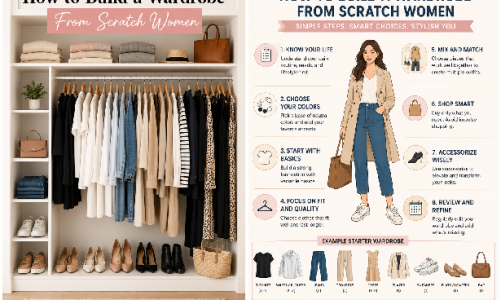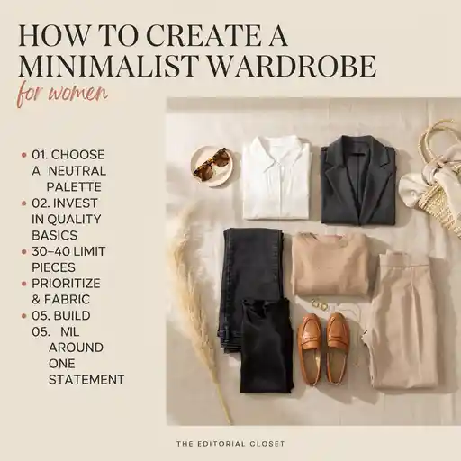
How to create a minimalist wardrobe for women starts with one simple idea: keep clothes you love, need, and actually wear.
A minimalist wardrobe does not mean wearing the same boring outfit every day. Instead, it means choosing fewer pieces that work well together. You can still enjoy color, prints, dresses, jewelry, shoes, and trends. The key is to make every item earn its place.
Moreover, a smaller wardrobe can make busy mornings much easier. Instead of searching through a crowded closet, you can quickly see your best choices. You can also spend less time shopping and more time enjoying your clothes.
Current capsule-wardrobe guides also stress that the right wardrobe should match your real lifestyle rather than follow one fixed list of items.
This guide explains how to create a minimalist wardrobe for women from the ground up. You will learn what to keep, what to remove, how many clothes you may need, how to choose colors, how to build outfits, and how to avoid buying clothes you will not wear.
You will also find a practical chart, real-life examples, case studies, expert-style advice, advantages, disadvantages, shopping rules, seasonal ideas, and 20 frequently asked questions.
What a Minimalist Wardrobe Really Means
A minimalist wardrobe is a small, useful collection of clothes that fit your life.
However, there is no perfect number of clothes for everyone. One woman may feel comfortable with 25 pieces, while another may need 50 or 70 because of work, weather, exercise, hobbies, or family life.
Therefore, do not focus only on the number.
Instead, ask:
- Do I wear this?
- Does it fit well?
- Does it feel comfortable?
- Can I style it in several ways?
- Does it suit my daily life?
- Would I buy it again?
If the answer is usually no, the item may not belong in your main wardrobe.
How to Create a Minimalist Wardrobe for Women Without Losing Your Style
Many women worry that minimalism means giving up personal style.
That is not true.
How to create a minimalist wardrobe for women successfully means finding your own version of simple dressing.
For example, you might love:
- Bright red shoes
- Floral dresses
- Gold jewelry
- Denim jackets
- Oversized shirts
- Sporty sneakers
- Soft pastel colors
- Black clothing
- Vintage pieces
You do not need to remove these things simply because they are not “basic.”
Instead, build your simple wardrobe around pieces that support your favorite style.
A minimalist wardrobe should make your style easier to see, not remove it.
Start With Your Real Daily Life
Before removing anything, think about how you spend your week.
Do you work in an office? Work from home? Study? Stay home with children? Travel often? Exercise every morning? Attend formal events?
Your wardrobe should answer these needs.
For example, an office worker may need:
- Blazers
- Smart trousers
- Blouses
- Comfortable work shoes
- Simple dresses
Meanwhile, someone who works from home may need more:
- Comfortable pants
- T-shirts
- Cardigans
- Casual dresses
- Easy shoes
So, how to create a minimalist wardrobe for women depends heavily on lifestyle.
Do not copy another woman’s closet without checking whether her life looks like yours.
Make a Lifestyle Clothing Map
Take a sheet of paper and divide your week into sections.
For example:
| Activity | Approx. Time | Clothes Needed |
| Work | 40% | Smart casual |
| Home | 25% | Comfortable basics |
| Exercise | 10% | Activewear |
| Social events | 10% | Dressy outfits |
| Travel | 10% | Versatile clothes |
| Special occasions | 5% | One or two outfits |
This simple exercise shows where your clothes should go.
Moreover, it can reveal a common problem: owning too many clothes for situations that rarely happen.
If you attend one formal event every six months, you probably do not need ten formal dresses.
Empty Your Closet Before You Judge It
One of the easiest ways to begin how to create a minimalist wardrobe for women is to take everything out.
Yes, everything.
Put your clothes on the bed, floor, or another clean surface.
Seeing everything together can be surprising.
You may discover:
- Five similar black shirts
- Three pairs of nearly identical jeans
- Clothes with tags still attached
- Items that no longer fit
- Clothes you forgot you owned
- Clothes that need repair
- Clothes you love but never wear
Do not panic.
The goal is not to throw everything away.
The goal is to understand what you own.
Build Four Simple Clothing Groups
Now create four groups.
Keep
These are clothes you love and wear often.
Maybe
These are clothes you are unsure about.
Repair
These need a small fix before you decide.
Let Go
These no longer fit your life, body, style, or comfort needs.
This method feels easier than trying to make every decision at once.
Also, keep your “maybe” pile separate for a few weeks. You may discover that you miss some pieces. Others may never cross your mind.
Use the One-Year Test Carefully
A common rule says to remove anything you have not worn in a year.
That can help, but it should not control every decision.
For example, a winter coat may not get worn during a hot year.
A wedding dress may only be worn once.
A rain jacket may stay unused during a dry season.
Therefore, ask why you did not wear something.
If the reason is “I had no reason to wear it,” keep it if it serves a real purpose.
If the reason is “I never liked it,” that tells you something important.
Learn the Difference Between Wanting and Wearing
This is one of the biggest lessons in how to create a minimalist wardrobe for women.
You may love an item in a store but dislike wearing it at home.
For example, a pair of high heels may look beautiful. Yet if you prefer sneakers, the heels may spend most of their life in your closet.
Likewise, you may admire fitted clothes online but always reach for loose clothing.
Your wardrobe should reflect your wearing habits.
Style inspiration matters, but comfort and real life matter more.
Find Your Three Main Style Words
Choose three words that describe the style you want.
Examples include:
- Simple
- Elegant
- Comfortable
- Modern
- Feminine
- Sporty
- Classic
- Relaxed
- Creative
- Polished
- Natural
- Bold
For example, your three words could be:
Simple + feminine + comfortable.
Now use those words when shopping.
If an item looks nice but does not match your three words, pause before buying it.
How to Create a Minimalist Wardrobe for Women Around a Color Plan
Color can make a small wardrobe much more useful.
Start with two or three main neutral colors.
Good choices include:
- Black
- White
- Cream
- Navy
- Gray
- Brown
- Beige
- Olive
Then add one to three accent colors.
For example:
Neutrals: navy, white, beige
Accent: red, green, light blue
Now many clothes can mix together.
However, you do not need to wear only neutral colors. If pink is your favorite color, pink can become part of your core wardrobe.
The best color system is one you enjoy.
Create a Simple Color Formula
Try this formula:
60% neutral + 30% secondary color + 10% accent.
For example:
- 60% black, white, cream
- 30% denim and navy
- 10% red
This is not a strict rule.
Instead, it is a starting point.
If you love colorful clothes, use more color. If you prefer quiet outfits, use more neutrals.
The goal is easy mixing.
Build Around Your Favorite Bottoms
Bottoms often form the foundation of an outfit.
Start with pieces you know you wear.
A useful collection may include:
- One comfortable blue jean
- One black trouser
- One casual trouser
- One skirt
- One pair of shorts
- One comfortable everyday pant
You do not need all six.
Choose according to your lifestyle.
For example, a woman who rarely wears skirts should not buy three skirts just because a capsule wardrobe checklist recommends them.
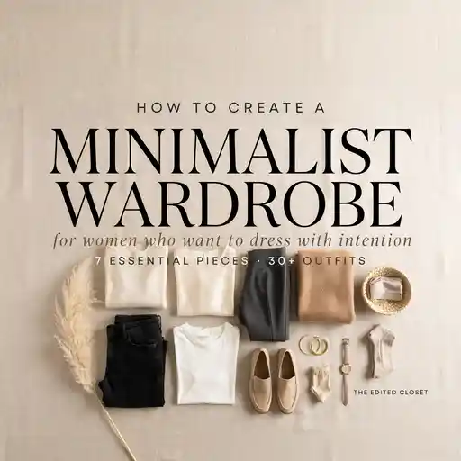
Choose Tops That Work Hard
Tops create variety.
A small wardrobe can include:
- Two everyday T-shirts
- One nicer T-shirt
- One button-up shirt
- One blouse
- One tank top
- One long-sleeve top
- One sweater
Again, these numbers are flexible.
A person living in a hot climate may need more lightweight tops.
Someone living in a cold climate may need more sweaters.
Add One or Two Strong Layers
Layers make simple clothes look different.
Useful choices include:
- Cardigan
- Denim jacket
- Blazer
- Lightweight jacket
- Trench coat
- Overshirt
- Sweater
A blazer can turn jeans and a T-shirt into a work-ready outfit.
Meanwhile, a denim jacket can make a dress feel more casual.
That is exactly why versatile layers matter in how to create a minimalist wardrobe for women.
Pick Dresses That Solve Problems
A dress can be one of the most useful pieces in a minimalist wardrobe.
Choose dresses that can work for more than one situation.
For example:
Simple black dress:
Work + dinner + event
Cotton day dress:
Shopping + lunch + travel
Shirt dress:
Office + casual day + weekend
A versatile dress gives you a complete outfit without needing to match separate tops and bottoms.
How to Create a Minimalist Wardrobe for Women With Better Shoes
Shoes can quickly take over a closet.
Instead of buying every style, think about the jobs your shoes must do.
A practical collection might include:
- Everyday sneakers
- Comfortable flats
- Dressy shoes
- Sandals
- Boots
- Activity shoes
You may need fewer.
For example, if you live somewhere warm and rarely attend formal events, sandals and sneakers may matter more than boots and heels.
Give Accessories a Smaller Role
Accessories can add personality without filling your closet.
Consider:
- One everyday handbag
- One larger practical bag
- One small evening bag
- One belt
- One scarf
- A few favorite jewelry pieces
- Sunglasses
- A simple watch
However, do not buy accessories just because they are small.
Ten unused handbags are still clutter.
Choose Fabric for Your Lifestyle
Fabric matters because clothes should be comfortable and easy to care for.
Common choices include:
Cotton
Comfortable and useful for everyday wear.
Linen
Light and breathable, especially in warm weather.
Wool
Useful for warmth and layering.
Denim
Strong and practical for casual clothing.
Knit fabrics
Comfortable and flexible.
Synthetic blends
Some can be durable, stretchy, and easy to care for.
Do not assume that one fabric is always better than another. Check the garment’s use, quality, feel, and care needs.
How to Create a Minimalist Wardrobe for Women That Is Easy to Wash
A beautiful item that needs constant special care may become annoying.
Before buying, check the care label.
The FTC explains that clothing care labels provide instructions for washing, drying, ironing, bleaching, and related care.
Therefore, think about your real laundry habits.
If you dislike dry cleaning, do not fill your wardrobe with clothes that require it.
If you hate ironing, choose fabrics that need little pressing.
Simple care can make a minimalist wardrobe much easier to maintain.
Create an Outfit Formula
An outfit formula is a simple combination you can repeat.
For example:
T-shirt + jeans + sneakers + jacket
Or:
Blouse + trousers + flats + handbag
Or:
Dress + cardigan + flats
You can repeat the formula with different colors.
This removes daily decision stress.
Build a 10-Minute Morning Wardrobe
A good minimalist wardrobe should help you get dressed quickly.
Try this morning system:
- Check the weather.
- Pick your main activity.
- Choose one bottom.
- Choose one top.
- Add a layer.
- Pick shoes.
- Add one or two accessories.
- Leave the bedroom.
You do not need to create a brand-new outfit every morning.
Repeating outfits is completely normal.
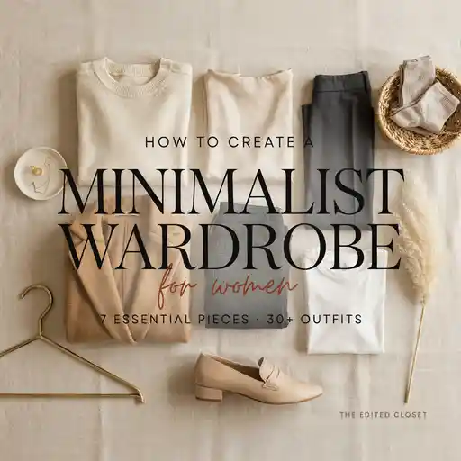
How to Create a Minimalist Wardrobe for Women With a 30-Piece Starter Plan
Here is a sample starting point.
| Category | Suggested Number |
| T-shirts | 4 |
| Blouses/shirts | 4 |
| Sweaters/cardigans | 3 |
| Jeans | 2 |
| Trousers | 3 |
| Skirt | 1 |
| Dresses | 3 |
| Jacket/blazer | 2 |
| Shorts | 1 |
| Sneakers | 1 |
| Flats | 1 |
| Sandals | 1 |
| Boots | 1 |
| Special shoes | 1 |
| Core total | 33 |
This is only an example.
You can remove pieces that do not fit your life.
Do Not Forget Underwear and Home Clothes
Minimalism should include the clothes people actually wear.
You need enough underwear, sleepwear, workout clothes, and home clothes to support your laundry schedule.
However, avoid having 20 old T-shirts simply because they are “comfortable.”
Ask whether you actually use them.
Keep your best comfortable pieces.
Let the worn-out pieces go when they become unsuitable.
Make Your Closet Easy to See
Organization can make a small wardrobe feel even better.
Try:
- Matching hangers
- One direction for hanging clothes
- Folded sweaters
- Shoes in pairs
- Bags on one shelf
- Seasonal storage
- A small laundry area
Keep your most-used clothes where you can see them.
If you cannot see an item, you may forget about it.
How to Create a Minimalist Wardrobe for Women on a Small Budget
You do not need a large shopping budget.
In fact, the first step should usually be shopping your own closet.
Then make a list of true gaps.
For example:
Need: black trousers
Want: another black sweater
Buy the trousers first.
You can also save money by:
- Buying secondhand
- Waiting for useful sales
- Repairing clothes
- Swapping with friends
- Choosing versatile pieces
- Avoiding impulse shopping
UNEP recommends moving fashion toward more circular systems and addressing overproduction and overconsumption.
Try the 30-Day No-Buy Challenge
Before rebuilding your wardrobe, stop buying clothes for 30 days.
During this time, write down what you want to buy.
Do not buy it immediately.
After 30 days, review the list.
You may find that many “needs” disappeared.
This teaches you the difference between a real wardrobe gap and a temporary shopping urge.
Use a Shopping Gap List
Your gap list should be very specific.
Bad list:
I need more clothes.
Better list:
I need one breathable white shirt that works with my black trousers and blue jeans.
The second statement gives you a clear shopping goal.
It also helps you avoid buying five shirts that do the same job.
How to Create a Minimalist Wardrobe for Women With the One-In, One-Out Rule
When your wardrobe feels complete, try one-in, one-out.
If you buy one pair of jeans, remove one pair you no longer need.
If you buy a new sweater, review your existing sweaters.
This does not mean you must throw away something every time.
Instead, it creates a pause.
You must ask whether the new item improves your wardrobe.
Learn the Cost-Per-Wear Idea
A cheap item is not always cheaper.
Imagine:
$20 shirt worn twice = $10 per wear
Now imagine:
$80 shirt worn 40 times = $2 per wear
Price matters, but use matters too.
A high-quality item is not automatically a good purchase. However, a well-made piece that you wear often can provide better value than a cheap item you rarely use.
Real-Life Example: Maya’s Crowded Closet
Let’s imagine Maya.
Maya owns 85 clothing items.
Yet every morning she wears the same:
- Blue jeans
- White shirt
- Black cardigan
- Sneakers
She decides to track her outfits for 30 days.
She discovers that she wears only 27 items regularly.
Instead of throwing away 58 items immediately, she creates a trial wardrobe.
She stores the rest in boxes.
After three months, she misses only four pieces.
So she brings those four back.
The rest can now be donated, sold, recycled, or given away responsibly.
This example shows an important lesson: how to create a minimalist wardrobe for women is more about observing your habits than following a perfect number.
Case Study: The Office Worker
Consider another example.
Sara works in an office four days a week.
She owns many casual clothes but often feels unprepared for work.
Her solution is not to buy 20 new outfits.
Instead, she creates a small work section:
- 2 trousers
- 1 skirt
- 3 blouses
- 2 knit tops
- 1 blazer
- 1 cardigan
- 2 pairs of work shoes
- 1 simple dress
Now she can combine the pieces in many ways.
For example:
Monday: trousers + blouse + blazer
Tuesday: skirt + knit top + cardigan
Wednesday: trousers + knit top + blazer
Thursday: dress + cardigan
She spends less time deciding what to wear.
Case Study: The Stay-at-Home Parent
Now consider Emma.
Emma spends most days at home, walks outside, shops for groceries, and takes her children to school.
She does not need a closet filled with formal dresses.
Instead, she chooses:
- Comfortable jeans
- Stretch trousers
- Cotton T-shirts
- Easy sweaters
- Casual dresses
- Sneakers
- Sandals
- One nicer outfit
Her wardrobe works because it matches her life.
This is a major principle in how to create a minimalist wardrobe for women: build for your actual week.
Expert Advice: Choose Versatility Over Quantity
Fashion experts and capsule-wardrobe writers often stress that the ideal capsule is personal. Glamour notes that cuts, colors, and clothing needs vary from person to person.
So, instead of asking:
“What 20 items should every woman own?”
Ask:
“Which items give me the most useful outfits?”
That small change can completely improve your wardrobe plan.
Research into automated capsule wardrobe systems also focuses on versatility, compatibility, and personal preference when selecting a smaller set of clothing.
Advantages of a Minimalist Wardrobe
There are many benefits.
Less clutter
Your closet becomes easier to manage.
Faster mornings
You have fewer choices.
Easier packing
You can create travel outfits faster.
Better shopping habits
You become more careful about purchases.
Lower spending
You may buy fewer unnecessary items.
More outfit combinations
Well-matched pieces can create many looks.
Better style awareness
You learn what you truly enjoy wearing.
Easier laundry
You can see what needs washing.
Disadvantages of a Minimalist Wardrobe
Minimalism is not perfect for everyone.
You may miss variety
Some people enjoy having many choices.
Laundry may become more frequent
A smaller collection means you may wash clothes more often.
Special occasions can be difficult
You may need to plan for weddings, parties, or formal events.
Trends may feel less exciting
If you enjoy fashion trends, a very small wardrobe may feel restrictive.
Your needs can change
A new job, move, pregnancy, hobby, or climate can change what you need.
Therefore, keep your wardrobe flexible.
How to Create a Minimalist Wardrobe for Women for Summer
Summer usually calls for lightweight clothing.
Consider:
- Cotton T-shirts
- Linen shirts
- Breathable trousers
- Shorts
- Simple dresses
- Sandals
- Lightweight skirts
- Sun protection accessories
Choose pieces that work in several combinations.
For example, one linen shirt can work with shorts, jeans, trousers, or a skirt.
Build a Winter Version Without Starting Over
You do not need a completely different wardrobe every season.
Instead, use layers.
A summer dress can work with:
- Sweater
- Tights
- Boots
- Coat
A T-shirt can work under:
- Cardigan
- Blazer
- Jacket
- Sweater
This approach saves storage space and money.
Create a Travel-Friendly Mini Wardrobe
Travel is a great test of minimalism.
For a short trip, try:
- 3 tops
- 2 bottoms
- 1 dress
- 1 layer
- 2 pairs of shoes
- 1 jacket if needed
- Small accessories
Choose pieces that match each other.
For example, every top should work with both bottoms.
That gives you several outfits without a heavy suitcase.
How to Create a Minimalist Wardrobe for Women With Statement Pieces
Minimalism does not mean no statement pieces.
Keep a few items that make you happy.
Examples include:
- Bright red coat
- Floral dress
- Colorful handbag
- Printed skirt
- Statement necklace
- Bold shoes
The trick is balance.
If your basic clothes are easy to mix, a statement piece can become the star.
You do not need ten statement pieces for every possible mood.
Repair Before You Replace
A small hole does not always mean a garment belongs in the trash.
You can:
- Sew a button
- Fix a small tear
- Replace a zipper
- Shorten trousers
- Repair a hem
- Remove small stains
Repairing can extend the life of clothing.
Also, check care instructions before washing or treating an item. The FTC advises consumers to follow garment care instructions because incorrect care can damage clothing.
Donate and Reuse With Care
When you remove clothing, do not automatically throw everything into the trash.
Consider:
- Selling good items
- Donating usable clothes
- Giving clothes to family or friends
- Repairing items
- Reusing fabric
- Using proper textile recycling where available
The EPA tracks textiles as part of municipal solid waste, which shows why thoughtful handling of unwanted clothing matters.
Still, do not donate badly damaged clothing simply to move the problem somewhere else.
Stop Buying Fantasy Clothes
“Fantasy clothes” are clothes for a life you do not actually live.
For example:
- Expensive office suits when you work from home
- Six party dresses when you rarely attend events
- Hiking gear when you never hike
- High heels when you always wear flats
Before buying, ask:
Where will I wear this?
If you cannot name several realistic occasions, wait.
How to Create a Minimalist Wardrobe for Women Without Following Every Trend
Trends can be fun.
However, buying every trend can quickly make your wardrobe crowded.
Instead, use a three-question trend test:
- Do I genuinely like it?
- Does it match my current wardrobe?
- Will I wear it often?
If all three answers are yes, consider buying it.
If only one answer is yes, wait.
Minimalism does not mean ignoring fashion. It means choosing fashion with intention.
Use a 90-Day Wardrobe Review
Every three months, review your clothes.
Ask:
- What did I wear most?
- What did I never wear?
- What felt uncomfortable?
- What needs repair?
- What do I need for the next season?
- Did I buy anything I regret?
- Which outfits received compliments?
- Which clothes made getting dressed easy?
Then make small changes.
Do not rebuild your entire closet every season.
A minimalist wardrobe should evolve slowly.
The Final How to Create a Minimalist Wardrobe for Women Checklist
Use this checklist when your wardrobe is ready for its final review.
Keep
☐ Fits well
☐ Feels comfortable
☐ Matches your style
☐ Gets worn regularly
☐ Works with other clothes
☐ Serves a real purpose
☐ You would buy it again
Question
☐ Haven’t worn it recently
☐ Difficult to style
☐ Needs repair
☐ Wrong size
☐ Uncomfortable
☐ Bought because of a trend
☐ Bought for a fantasy lifestyle
Remove or relocate
☐ Damaged beyond repair
☐ Never liked
☐ No longer fits your life
☐ Duplicate you never use
☐ Uncomfortable
☐ No realistic occasion for it
How Many Clothes Should a Woman Have?
There is no universal answer.
Some women prefer 20 to 30 core pieces. Others need 40, 50, or more.
Your number depends on:
- Climate
- Work
- Laundry schedule
- Exercise
- Family life
- Social activities
- Personal style
- Budget
- Travel
- Storage space
A better goal is maximum usefulness with minimum waste.
For example, 40 well-used pieces can be more minimalist in spirit than 20 pieces you dislike and constantly replace.
A Practical 40-Piece Minimalist Wardrobe Example
Here is another sample plan.
| Category | Number |
| T-shirts | 5 |
| Blouses/shirts | 5 |
| Sweaters/cardigans | 4 |
| Jeans | 2 |
| Trousers | 3 |
| Skirt | 1 |
| Dresses | 4 |
| Shorts | 1 |
| Blazer | 1 |
| Casual jacket | 1 |
| Coat | 1 |
| Sneakers | 1 |
| Flats | 1 |
| Sandals | 1 |
| Boots | 1 |
| Dress shoes | 1 |
| Total | 33 core clothing/shoe pieces |
You can add underwear, sleepwear, workout clothing, coats, and accessories separately.
The point is not the exact number.
The point is that everything should have a reason.
FAQs About How to Create a Minimalist Wardrobe for Women
- What is a minimalist wardrobe for women?
A minimalist wardrobe is a carefully chosen collection of clothing that fits your lifestyle, personal style, and daily needs. It focuses on useful pieces rather than a large number of clothes.
- How to create a minimalist wardrobe for women on a budget?
Start with your current clothes. Remove items you do not use, identify genuine gaps, and buy only those missing pieces. Secondhand shopping and clothing repair can also reduce costs.
- How many clothes should be in a minimalist wardrobe?
There is no fixed number. Some women may need 25 to 30 core pieces, while others may need 50 or more. Your lifestyle should decide the number.
- What are the best minimalist wardrobe colors?
Black, white, cream, navy, gray, beige, brown, and denim are easy choices. However, you can use any colors that you enjoy wearing.
- Does a minimalist wardrobe have to be neutral?
No. Minimalism is about owning and using clothing intentionally. You can include bright colors, patterns, and statement pieces.
- What should I remove first?
Start with clothes that do not fit, feel uncomfortable, are damaged beyond repair, or have never matched your style.
- Should I keep clothes I might wear someday?
Keep special-purpose clothing if you have a realistic reason to need it. However, avoid keeping large amounts of fantasy clothing.
- How many pairs of jeans does a woman need?
There is no required number. One or two pairs may be enough for many women, while others may need different fits or styles.
- Can a minimalist wardrobe include dresses?
Absolutely. Dresses can be very useful because one piece creates a complete outfit. Choose styles that work for several occasions.
- How can I make a small wardrobe look different every day?
Change combinations, shoes, layers, bags, jewelry, and accessories. A single shirt can look very different with jeans, trousers, skirts, jackets, or cardigans.
- How to create a minimalist wardrobe for women for work?
Start with the dress code at your workplace. Choose a few trousers, blouses, layers, shoes, and dresses that can mix together. Build several reliable work outfit formulas.
- Is a capsule wardrobe the same as a minimalist wardrobe?
They are similar but not exactly the same. A capsule wardrobe usually focuses on a limited group of coordinated pieces, while minimalism is a broader approach to owning less and choosing intentionally.
- Can I have a minimalist wardrobe if I love fashion?
Yes. You can enjoy fashion while owning fewer clothes. Focus on pieces that truly excite you and work with what you already own.
- Should I buy expensive clothes?
Not necessarily. Price does not automatically equal quality. Look at fit, fabric, construction, comfort, care needs, and how often you expect to wear the item.
- How often should I review my wardrobe?
A seasonal review every three months works well for many people. However, you can review it whenever your lifestyle changes.
- What should I do with clothes I no longer want?
Depending on condition, you can sell, donate, swap, repair, reuse, or recycle them through suitable local programs.
- How can I stop buying too many clothes?
Use a waiting period. Put desired items on a list and wait before purchasing. Also, shop with a specific gap list instead of browsing without a plan.
- Is minimalist fashion better for the environment?
Owning fewer clothes and using them for longer can support lower consumption. However, no single wardrobe choice solves fashion’s environmental impact. UNEP emphasizes wider changes toward circular textile systems and reduced overproduction and overconsumption.
- Can I create a minimalist wardrobe with secondhand clothing?
Yes. Secondhand shopping can be an excellent way to find useful pieces while avoiding some new production. However, buy only what you need.
- What is the most important rule for building a minimalist wardrobe?
Choose clothes for your real life. If a piece fits well, feels good, matches your style, and works with several outfits, it has a strong reason to stay.
Final Thoughts: Build a Wardrobe That Works for You
Learning how to create a minimalist wardrobe for women is not about throwing away half your closet overnight.
It is about making better decisions.
Start slowly.
First, understand your lifestyle. Then, study what you already own. Next, remove obvious clutter. After that, create a simple color plan and choose versatile clothes that work together.
Most importantly, do not copy someone else’s wardrobe.
Your ideal closet may contain 25 pieces. It may contain 40. It may contain 60. The right number is the number that supports your life without creating unnecessary clutter.
A good minimalist wardrobe should make mornings easier. It should help you feel comfortable. It should save space. It should reduce random shopping. It should also leave room for your personality.
Remember, how to create a minimalist wardrobe for women is ultimately a personal process. You are not trying to create the smallest wardrobe possible. You are creating the most useful wardrobe possible.
So start with the clothes you already love.
Wear them more.
Combine them in new ways.
Repair what deserves another chance.
Buy slowly.
And let your wardrobe become simpler over time.
Best External Resources
- UNEP – Sustainable and Circular Textiles
Excellent for supporting sections about sustainable fashion, overconsumption, circular clothing, and responsible textile use. UNEP: Sustainable and Circular Textiles - UNEP – Five Ways to Reduce Waste in the Fashion Industry
Useful for your sections about buying less, repairing clothing, secondhand shopping, swapping clothes, and building a capsule wardrobe. UNEP: Five Ways to Reduce Waste in Fashion - UNEP – Sustainable Fashion Communication Playbook
A strong source for discussing mindful shopping, reducing overconsumption, clothing longevity, repair, reuse, and sustainable fashion choices. UNEP: Sustainable Fashion Communication Playbook - UNEP – Shifting the Fashion Narrative
Helpful for explaining why consumers should think about how much they buy and how they use clothing. UNEP: Shifting the Fashion Narrative - UNEP – Sustainable Fashion Communication Strategy
Good supporting resource for sections discussing fashion consumption, environmental impact, and more sustainable lifestyle choices. UNEP: Sustainable Fashion Communication Strategy - UNEP – 2025 Zero Waste Fashion Key Messages
Particularly useful for your recommendations about buying only what you need, choosing durable clothing, repairing garments, buying vintage, swapping clothes, and creating a core wardrobe. UNEP: International Day of Zero Waste – Fashion Key Messages - UNEP – Sustainable Textile Value Chain Report
A more detailed source if you want to strengthen the article’s sustainability and textile-industry sections. UNEP: Sustainable Textile Value Chain Report